
A transformative year for PMS: How the middle school has reversed its trajectory
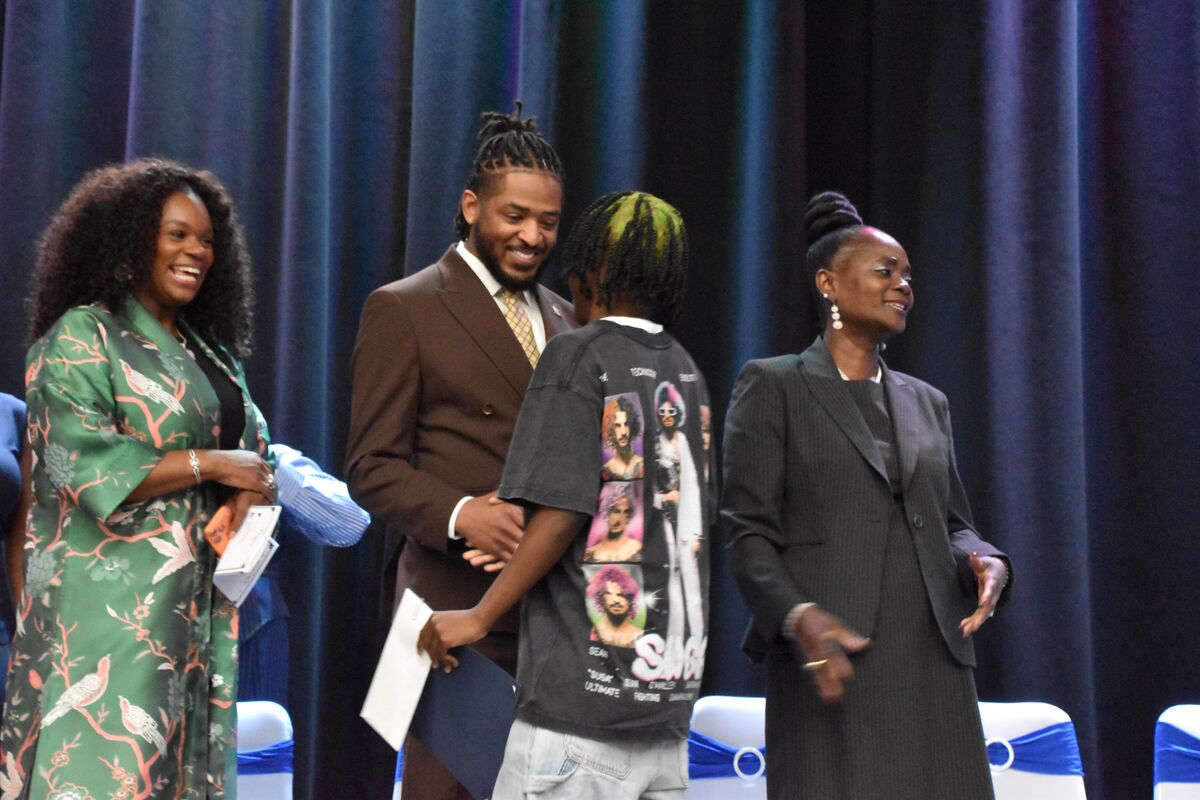 Wearing a full suit with a microphone in hand, Barrington Atkins opened orientation for incoming students and parents last August by introducing himself.
“My name is Barrington Atkins,” he said. “I am the new, excited principal of Poughkeepsie Middle School.”
He paused, anticipating a reaction. After three seconds of silence, he let out an awkward chuckle, eliciting a smattering of applause.
Ten months later, his introduction at Wednesday’s 8th Grade Recognition Ceremony was welcomed by a thunderous and prolonged ovation.
After years – decades – in which the school has underperformed and notoriously struggled with student behavior and safety, students and staff agree 2025-26 has been a year filled with hope.
Students qualifying for positive behavior incentives are up. Student disciplinary referrals are down – decreased by thousands. Participation in standardized testing this spring was nearly perfect. Teachers are optimistic that the changes may stick.
Suddenly, Poughkeepsie Middle School has a culture of expectation and accountability, which building leaders hope to use as a foundation for academic excellence.
Staff and students point to Atkins and his administrative team for laying a foundation of high expectations, collaboration and consistency following years in which the faces leading the building changed annually and application of discipline was inconsistent. This year, not only has there been stability in addressing misbehavior, but also in incentivizing and rewarding positive behavior through assemblies, in-school benefits and field trips.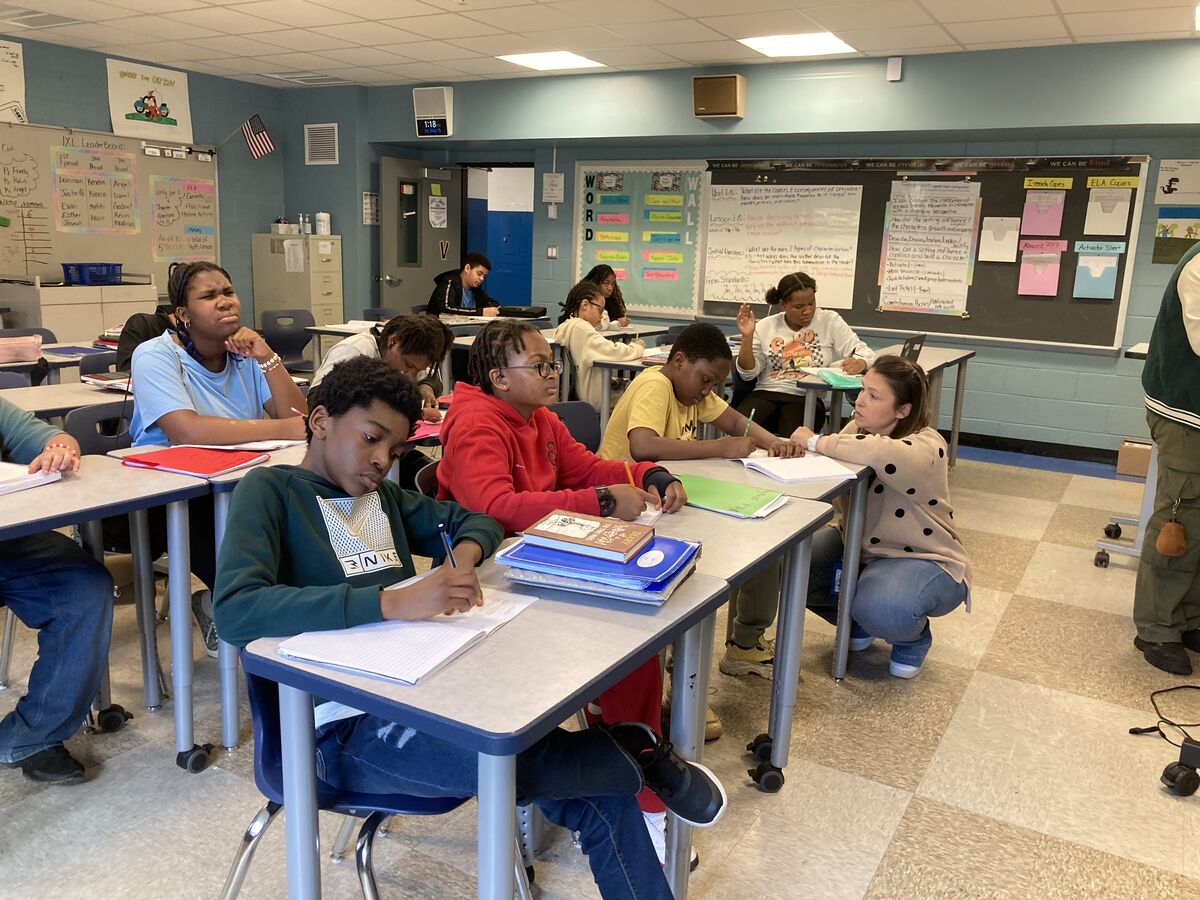 “There was a lot of turnover. Whenever you get a new principal, there’s new expectations,” eighth-grade teacher Samantha Rosario said of the challenge of having four building principals in four years, before praising the consistency this year, under Atkins. “(Students) know, ‘If I come in on Monday and I act this way, and then I do it again on Friday, it’s going to be (treated) the same.’”
Atkins has proven to students he will “stand on his word,” which is how he won them over, seventh grader Janelle Ryland said.
“He stuck to it,” she said. “When I met him in my summer camp program and he said that he was standing on business from August to June – he stood on everything that he said that he would. He doesn’t say something and then just scratches the idea. No, he sticks. He says something and he sticks to it.”
Atkins himself – a Poughkeepsie native well-versed in the school’s history – prefers the credit for this year be spread broadly, understanding the importance of partnership in this work – which was one of those messages he had for families during that new student orientation 10 months ago.
“It’s not me as a building principal changing the culture,” he said. “It’s all of us together and making this the best school.”
For a video look at how 2025-26 has been a year of transformation at Poughkeepsie Middle School, with reflections from students and staff, watch the video above. Below, read more about three important changes and accomplishments this year.
Students opted in to tests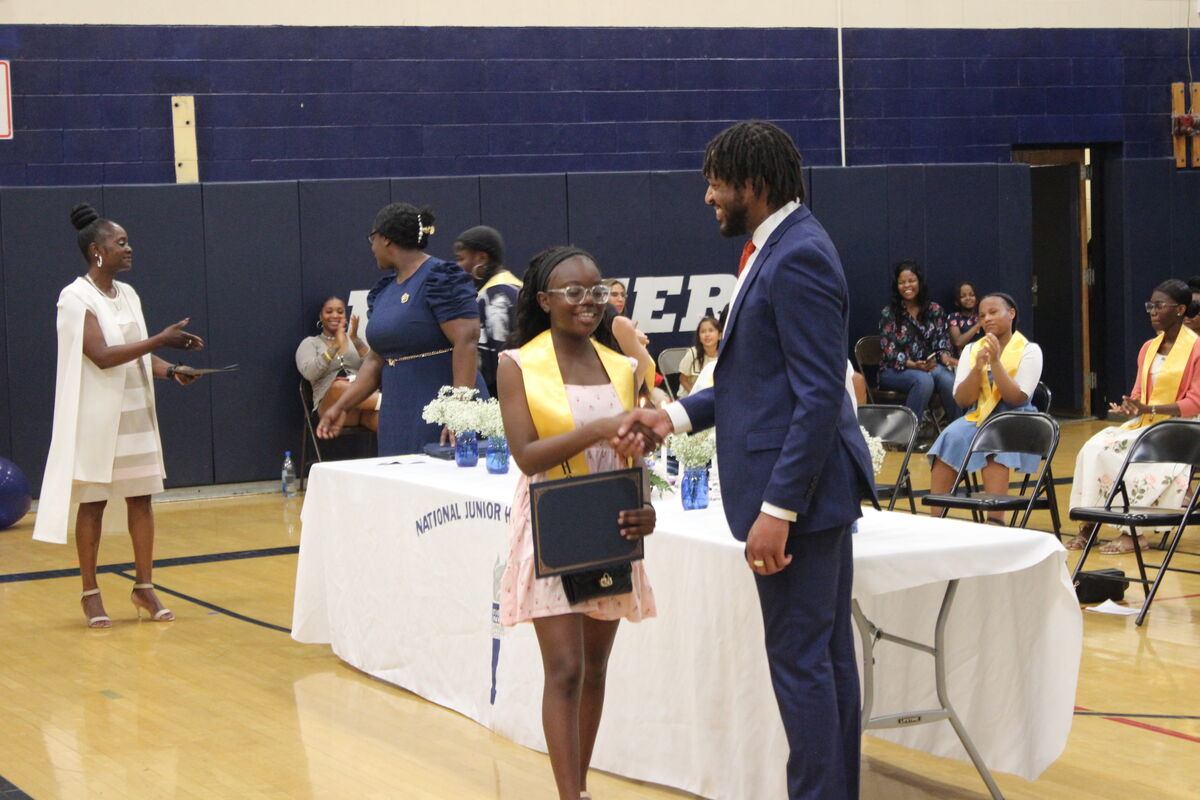 Across the state, schools struggle with high percentages of the student population opting out of taking the state’s standardized testing, despite many schools launching full awareness incentive campaigns to encourage participation.
For the first time since that trend began, test participation was not an issue at Poughkeepsie Middle School.
Roughly 99% of all sixth graders took the state tests, as did 98% of seventh graders. Eighth-grade participation was in the mid-90s. And staff attendance was perfect for testing days.
Compare that to last year, when just 65% of all students took the ELA assessment, 59% participated in math and 53% sat for the eighth-grade science assessment.
There was no formal campaign to encourage participation; it was a matter of “setting the expectation of what school is, and it has assessments,” Atkins said.
“In order to see if we’re functioning as a good school, we need students to sit,” he said, before discussing the importance of teachers’ influence. “I was told in previous years that there was no buy-in, overall, with students and families. We really focused on working with the teachers prepping for the tests, and, during our monthly town halls, talking with the students about testing and why it’s important.”
The increase in staff attendance on testing days was also a key in shifting the culture, he said. “Students are testing and they should have adults in front of them who they feel comfortable with and can support them through any process.”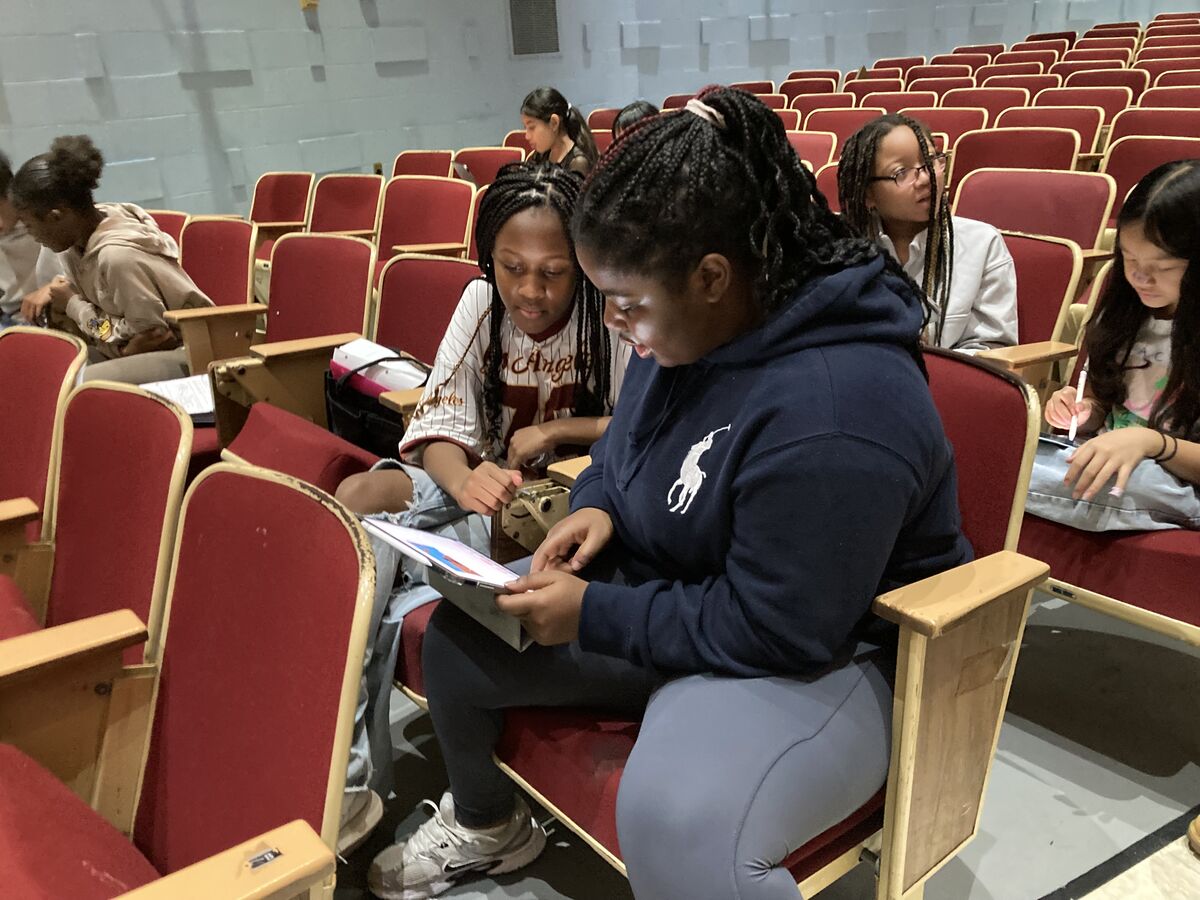 Atkins noted that last year, there were even honors students who chose to opt-out, feeling it acceptable. Ryland was among the students who didn’t participate.
“Last year, I didn’t really understand the concepts,” Ryland said, crediting the school’s new Homework Center for boosting her confidence. “This year, with more resources, I understand it. Math wasn’t really my thing, and this year I understand the concept of math.”
The boost in participation was rewarded, as well. During one of the town halls in which testing was discussed, the students were given the chance to suggest different special experiences or trips the school could explore if they met their participation goals. Every student in the building was treated to a day of bowling this month, a feat that spanned three days to fit everyone in.
“We took the state tests as a school and we got much better at it,” Ryland said.
Students relish RISE recognitions
With some past building leadership, Rosario said, the zeal to “crackdown” on behavioral issues resulted in “the kids who are doing things right getting thrown to the wayside.” Last year, under Assistant Principal for Climate and Culture Danielle Green, the school initiated its RISE assemblies, at which dozens of students are recognized with certificates honoring not only academic achievement but also behavioral excellence – those who show themselves to be hard workers or great citizens of the school.
“This year, there is a balance,” Rosario said.
Green said continuing those recognitions and increasing the benefits of students who earn them was a priority from the beginning of this year. Those benefits range from the day-to-day morsels of fun, like getting the freedom to eat lunch or enjoy recess outside, to participation in trips, such as when the school took its nearly 250 second-quarter Honor Roll students to Fun Max Adventure Park.
“The kids who do well in school, they go on trips,” eighth grader Lei’lani Huxtable said. “The trips cause other students to want to go on them again and get good grades.”
Students have also had memorable assemblies, such as hosting the Zuzu African Acrobats and establishing the Pioneer Unity Cup soccer tournament in recognition of Hispanic Heritage Month.
Atkins prioritized reestablishing outdoor recess time, with the district constructing a blacktop with basketball hoops over the summer. Seventh grade teacher Patricia Vertucci said it’s something the kids have been asking for and appreciate.
“Having that time outside, even just to sit and eat lunch, or to play on the basketball court, or just read a book outside,” she said, “I think they appreciate that their opinions were heard. … It gives them a break and allows them to come back and put more focus on their academics after that break.”
Students’ needs, behaviors addressed
Safety of the school was a key concern that numerous parents and staff members expressed to Atkins after he was named principal last year.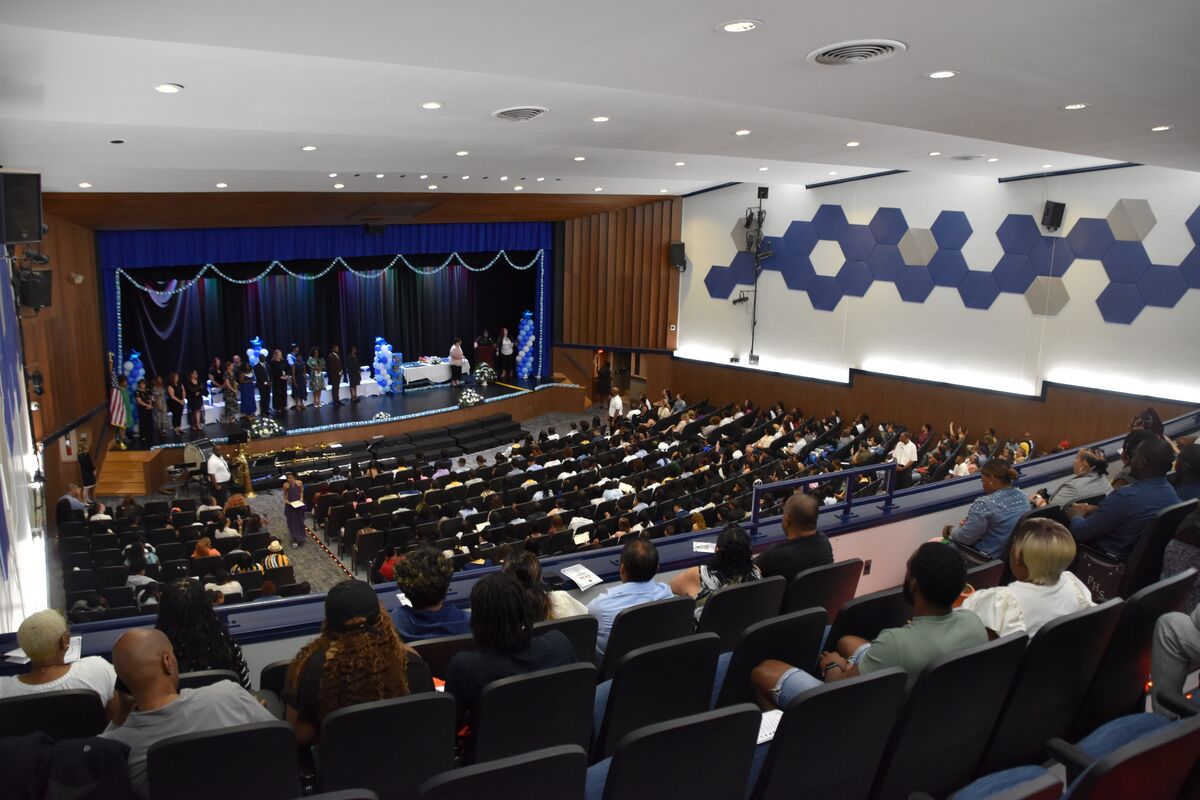 It’s also the area students are quickest to talk about now. “It’s safer in the school, Huxtable said.
“There’s way less fighting,” seventh grader Aylin Smith said. “There’s been less conflict than last year.”
Dijonae’ Roberts, a crisis intervention worker in the school for four years, said, “I definitely feel like there’s been a temperature change.”
It’s not just a feeling – though that is important in itself. Student referrals, or disciplinary actions, “have been cut down by thousands, compared to what they were last year. That really speaks to what we’re doing here as a building and where we want to go.”
The school’s RISE recognitions and incentives played a role in that change, Green said, as did early assemblies in which expectations were made clear. But, there’s an entire matrix of programs and supports that are now in place to provide alternative interventions to suspensions.
She noted the school’s “lunch bunch” groups “for students who are identified with targeted behaviors that did not align with our expectations,” with crisis intervention workers, Seven Mindsets caseworkers and social emotional learning counselors.
The staff uses “evidence-based research to tackle those struggles, whether it be anger management, coping skills, etc.,” she said.
The school utilizes the district’s intervention platform for documenting and logging research and evidence-based interventions for students. Time was spent during a Superintendent’s Conference Day to retrain staff, including teachers, on how to use these tools, as well.
Green said she and others – including the crisis workers, counselors, caseworkers and in-school clinicians – meet twice a week “to really do data-dives about our students – what’s going on with our students, using our community resources to really support the whole child.”
The result? “Every student in our building has been touched with at least one intervention, some students multiple,” Green said. “So, we have over 1,200 interventions logged for our students in this platform.”
The school also utilizes after-school detention and a “reset room,” as needed. Green noted the school’s 2% in-school suspension rate this year is “significantly lower than” 2024-25.
“Because we are finding alternative ways to discipline our students and really investigating a little more on what the issues are or what the root causes were, I think we saw a decrease in (negative) student behaviors,” she said.
